
Choose the Right GRP Kiosk
We manufacture two core product ranges — T-Series and F-Series — designed to suit different site footprints, equipment layouts and installation requirements.
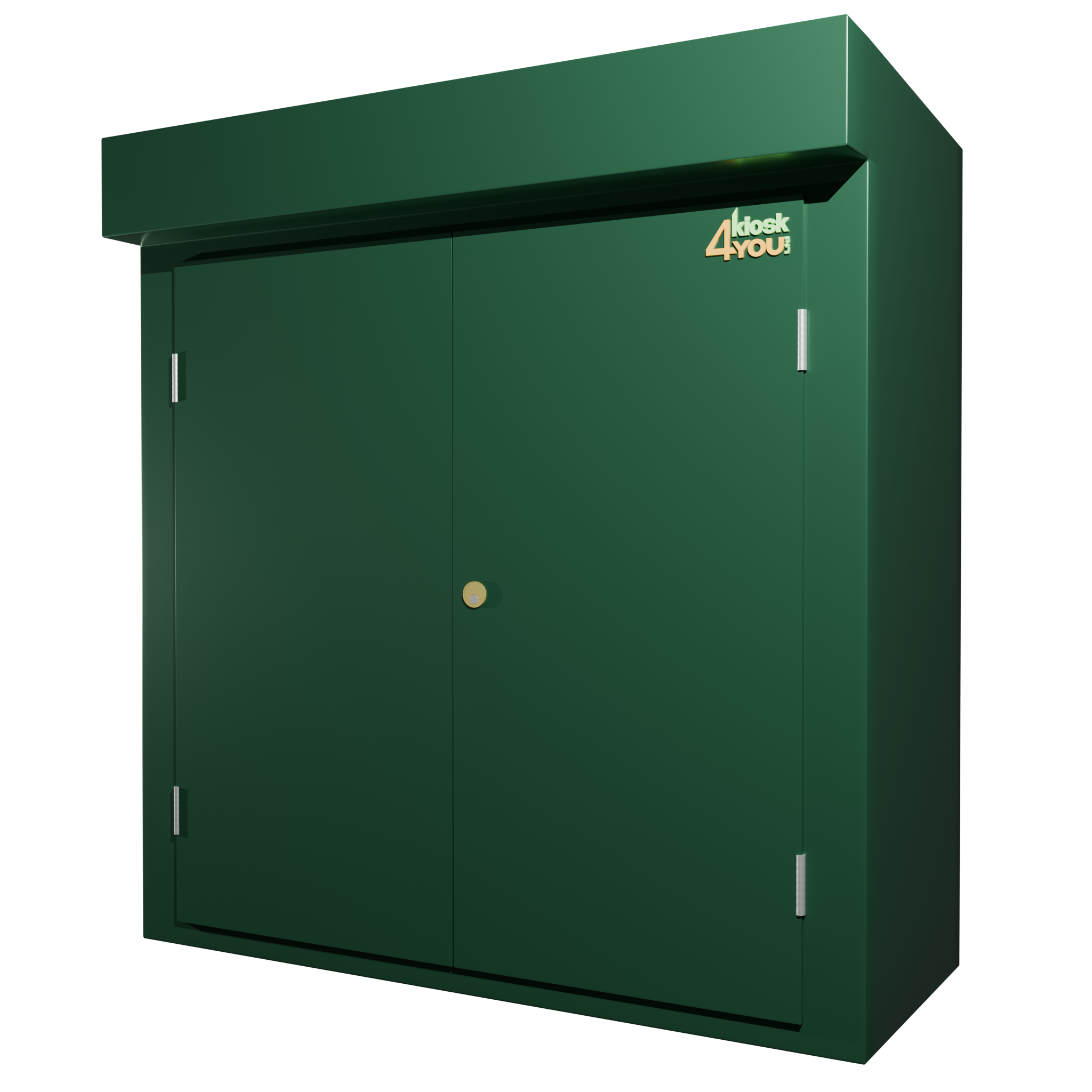
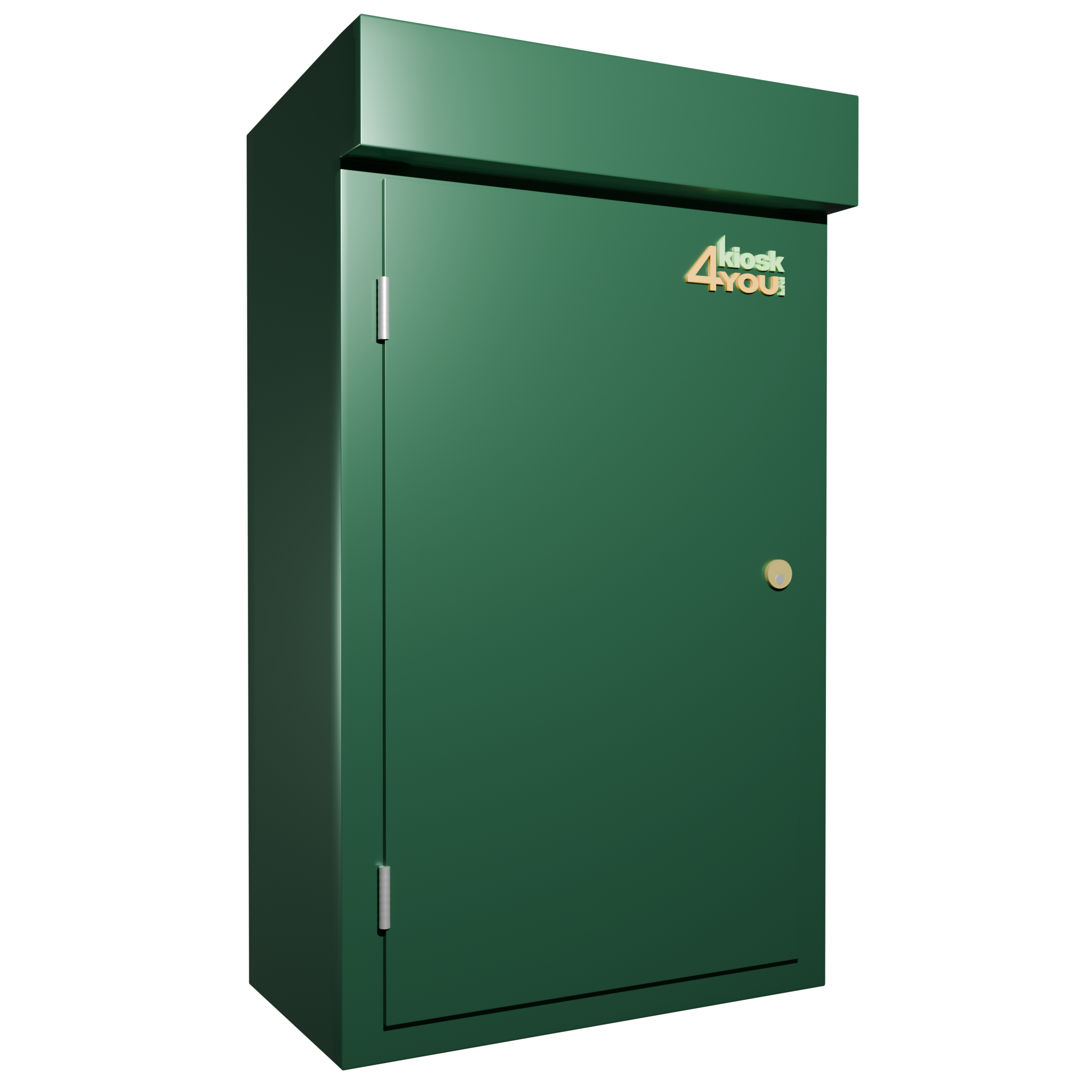
View Our GRP Kiosks in 3D
Use the 3D models to understand overall proportions and external design before selecting the right kiosk for your project.
GRP Construction
Corrosion-resistant material suitable for long-term outdoor use in UK environments.
Ground-Mounted Configuration
Designed for secure fixing to concrete bases and infrastructure foundations.
Secure Locking System
Provides controlled access for authorised personnel.
Heavy-Duty Hinges
Designed for repeated access in operational environments.
Full-Height Double Door Access
Wide opening area provides clear access for installation and servicing of internal equipment.
Weather-Deflecting Roof Design
Extended roof profile helps protect door seals from direct rainfall and improves long-term weather resistance.
Built for Long-Term Outdoor Use
All GRP kiosks are manufactured in the UK using durable, corrosion-resistant materials suitable for long-term outdoor installation. Each enclosure is designed with practical site requirements in mind — including secure fixing, cable entry planning and safe maintenance access.
Our focus is simple: reliable construction, consistent build quality and products that perform in real infrastructure environments.
Designed for Infrastructure Projects
Our T-Series and F-Series GRP kiosks are widely used across a range of UK projects, including:
The range supports both compact installations and larger multi-equipment configurations.
GRP Kiosk Installation & Product FAQs
In many cases, yes — but relocation requires careful disconnection of internal equipment and removal of anchor fixings. The integrity of the structure must be maintained during lifting and transport. If relocation is anticipated in the future, it is advisable to design the internal layout and cable routing with flexibility in mind. Proper planning makes future site adjustments more manageable.
The kiosk is typically secured using anchor bolts through pre-defined fixing points at the base. These bolts connect the enclosure to the concrete foundation, preventing movement and improving resistance to wind loads. Proper tightening and alignment are important to maintain structural integrity and ensure doors operate smoothly. Correct fixing also reduces the risk of water ingress at the base.
Physical placement and fixing of the kiosk can be completed relatively quickly once the base is prepared. However, total installation time depends on the complexity of the internal equipment, cable routing, and commissioning requirements. The enclosure itself is straightforward to position and secure; most time on site is typically spent on electrical installation and testing rather than the cabinet placement itself.
Yes, as long as the slab is structurally sound, level, and large enough to accommodate the kiosk footprint and fixing points. Before installation, the slab should be inspected for cracks, surface damage, or insufficient thickness. If heavy equipment will be installed inside the kiosk, the slab must be able to support the combined load safely. A proper assessment helps avoid movement or settlement over time.
A flat, level concrete base is generally recommended. The base should be sized slightly larger than the kiosk footprint to allow secure fixing and proper sealing. In some cases, a pre-cast plinth or raised foundation may be used, especially where ground conditions are uneven or where additional cable space is required below the unit. Ensuring the base is level is critical because an uneven surface can affect door alignment and long-term structural performance.
One of the key advantages of GRP is that it does not require repainting for corrosion protection. The colour and protective properties are built into the material itself. Unlike metal enclosures, there is no risk of rust forming beneath chipped paint. Occasional cleaning may be carried out for appearance or site compliance, but no ongoing protective coating programme is normally required.
Minor surface damage to GRP can often be repaired using specialist repair kits designed for composite materials. Prompt repair prevents further deterioration and maintains structural integrity. In cases of significant impact damage, a professional assessment is recommended to ensure the enclosure continues to provide adequate protection for internal equipment.
Yes. A well-maintained enclosure provides a stable, dry and secure environment for electrical and telecom equipment. Preventing water ingress, maintaining proper sealing and ensuring stable mounting conditions reduces stress on internal components. Over time, this contributes to improved reliability and reduced downtime.
Routine servicing should include visual inspection of the external surface, ensuring there are no cracks or impact damage. Door seals should be examined for wear or compression issues to maintain weather resistance. Hinges and locking mechanisms should operate smoothly and securely. Internally, mounting boards, rails and fixings should be checked for stability, and cable entries should remain properly sealed to prevent moisture ingress.
Yes, door seals can be replaced if they show signs of deterioration. Over time, repeated opening and closing may compress seals, reducing their effectiveness. Replacing worn seals helps maintain weather resistance and protects internal equipment from moisture and dust. Seal inspection should be part of any regular servicing routine.
